 By Admin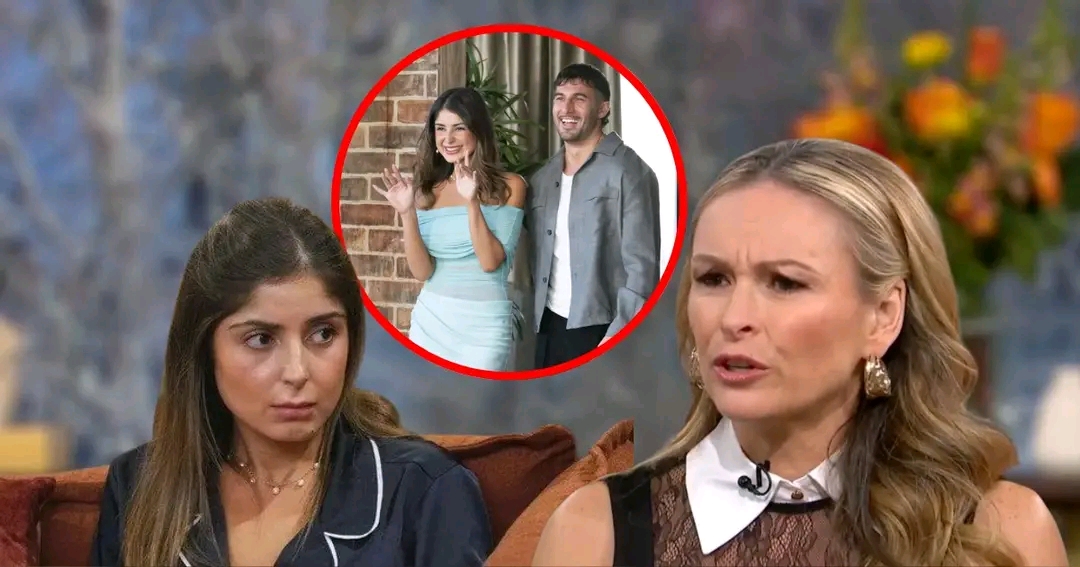
BREAKING NEWS: “That’s not who I am!” — Married at First Sight Australia bride Mel breaks her silence in an explosive confrontation over her so-called “villain edit,” accusing producers of twisting her story while calling out shocking sexist double standards; as backlash intensifies and the reality TV firestorm spirals, her emotional words are sparking a fierce national conversation — full details below

MAFS Firestorm: Mel Slams ‘Villain Edit’ and Calls Out Sexist Double Standards – Behind the Reality TV Turmoil
In a striking and emotional blowback from this year’s season of Married at First Sight, contestant Mel Akbay has publicly condemned what she describes as a “villain edit” that unfairly shaped her narrative on-screen — and she’s calling out the broader sexist double standards she believes are baked into how the show portrays women and men.
Mel, a bride who joined the experiment hoping to find genuine connection, didn’t expect to become one of the most controversial figures in MAFS’ current run. Instead, she says the way producers edited her interactions — particularly with her husband, Luke Fourniotis — twisted her intentions and depicted her as cold and unfeeling. She argues that this portrayal doesn’t reflect who she truly is or how she approached her relationship on the show.
In her first detailed media remarks since the backlash erupted, Mel described the experience as deeply unsettling — emotionally and personally. She shared that after episodes aired, she received severe online abuse, including threatening messages and derogatory language directed at her. So intense was the reaction that she says she has had to change routines like taking public transportation out of fear. This is not the type of response she anticipated; she went on MAFS simply to find love.
“It wasn’t that I wanted to cause drama or make everyone dislike me — I just didn’t feel a connection with Luke,” Mel told reporters, adding that the groom himself admitted he wasn’t attracted to her either. She says that normal human reactions — like protecting oneself or not forcing a connection that isn’t there — were warped into something cold and villainous by the editing process.
Perhaps most compelling in her account is the way Mel framed her experience in the context of broader gendered expectations. She highlighted how women on MAFS seem trapped in a double bind: if they show too much interest in their partner, they’re labelled insecure or “crazy,” and if they don’t show enough, they’re deemed cold or unloving. In her view, this reflects a broader societal expectation of women’s emotional roles that doesn’t apply equally to men. “If you like your husband and they’re not feeling it, you could be treated like … if you don’t like them, there’s something wrong,” she said.
Critics of reality TV editing have long argued that these shows manufacture drama by taking real interactions and selectively showing only what fits a chosen storyline — often at the expense of nuance and context. Mel’s case is no exception: she believes crucial moments that could have painted her in a more human, relatable light were excised in favour of a simplified narrative designed to create a “villain” character for viewers to react to.
Supporting this view, fellow cast members have pointed out that numerous moments — including intense dinner party interactions involving other couples — never made it to air. One castmate said there were three major dinner party scenes cut from the broadcast, including a heated exchange between Mel and Luke that may have helped show a fuller picture of their dynamics.
The backlash online has been a mirror of the division seen among viewers following almost every season of MAFS. Some online commentators believe editing is an inevitable part of reality TV — and that no one should be surprised when a show takes dramatic liberties for entertainment value. Others, however, argue that MAFS consistently frames women more harshly than men, especially in situations where a woman simply expresses personal boundaries or discomfort.
Observing this current firestorm, it’s clear that MAFS — like many contemporary reality shows — operates at the intersection of entertainment, social norms, and public perception. When camera crews capture delicate human moments and editors shape them into a dramatic arc, the result can be deeply personal consequences for participants. In Mel’s case, the emotional strain was high enough that she said it affected her mental well-being — a sobering reality that many reality TV alumni have highlighted in recent years.
While Mel acknowledges that she may have made some missteps in how she expressed her feelings during the show, she insists that her behaviour never crossed into abuse or malice. She points out that she never yelled at Luke, swore at him, or tried to manipulate him — yet, in the edited version, she appears unfeeling and distant. This disconnect between what really happened and what aired has been central to her criticism.
Mel has also spoken candidly about how her real-life instincts and social conditioning influenced her actions. She explained that as a woman, she has learned to be guarded in dating situations — not out of coldness, but as a form of self-protection rooted in lived experience and awareness of risks. In her view, this nuance was lost entirely in how the show chose to frame her story.
The controversy underscores a broader conversation about how reality TV platforms portray participants — and particularly how women are shown in emotionally complex situations. Fans of the show have taken to various online forums to dissect the fairness of edits, with some arguing that people constantly blame the edit whenever they receive negative reactions, while others highlight genuine patterns of bias in portrayal.
As MAFS continues its current season on Channel 9 and its streaming platform 9Now, the debate around contestant portrayal and editing practices shows no signs of abating. Mel’s perspective adds to a growing chorus of voices that question whether reality television’s need for compelling storytelling sometimes overrides the responsibility to represent participants truthfully.
The firestorm sparked by Mel’s accusation of a “villain edit” and sexist double standards has brought reality TV ethics back into public scrutiny — and it’s clear that for many viewers, the conversation about fairness, gender representation, and audience impact is only just beginning.