
BREAKING: Mathieu van der Poel Makes Shock Decision Before Tour de France… Tom Dumoulin Explains Why the Dutch Superstar Chose to Skip a Key Race, Calling It a “Rubbish” Event Despite Massive Fan Expectations… See more
Mathieu van der Poel’s Tour de France Focus Explained as Tom Dumoulin Backs Dutch Championship Absence
The absence of Mathieu van der Poel from the upcoming Dutch National Championships has become one of the major talking points in cycling this week, especially as fans in the Netherlands were eager to see one of their biggest stars in action. However, former Grand Tour winner Tom Dumoulin believes the decision is completely understandable, given the circumstances and the timing ahead of the Tour de France.
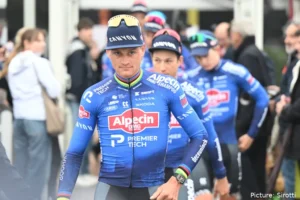
Van der Poel, who rides for Alpecin-Deceuninck, has opted to skip the Dutch National Championships in Nijmegen as he shifts full focus toward preparations for the Tour de France, which begins on July 4. For many cycling fans, the decision comes as a disappointment, but from a sporting perspective, it makes a lot of sense.
The Dutch rider has enjoyed a solid but somewhat mixed 2026 campaign so far. Although he has not secured a Monument victory this season, he has still delivered several impressive performances that remind the cycling world why he remains one of the most feared riders in the peloton. Strong results in races such as Tirreno-Adriatico, Omloop Het Nieuwsblad, and E3 Saxo Classic have shown flashes of his brilliance.
Yet by van der Poel’s incredibly high standards, the season has not fully delivered the dominant performances many expected. As a result, the Tour de France now represents a huge opportunity for him to reignite his season and remind everyone of his elite status on cycling’s biggest stage.
Tom Dumoulin, speaking on the NOS Wielerpodcast, made it clear that he fully understands why van der Poel chose not to participate in the national championship race. According to Dumoulin, the structure of the race and the course profile simply do not suit van der Poel’s strengths.
National Championships often create unusual racing dynamics. Unlike standard professional races where riders compete with full trade-team support, national championships can leave even the strongest riders isolated. Team tactics become unpredictable, and the strongest individual rider does not always win.
This is especially important in the Netherlands, where several strong teams are expected to control large portions of the race. Dumoulin specifically pointed to the strength of Team Visma | Lease a Bike, noting that their numbers could heavily influence the outcome.
According to Dumoulin, competing against a team with such strength makes victory significantly harder, even for someone as talented as van der Poel.
He explained that the race could become more about tactics and luck than pure strength. Even if van der Poel entered as the strongest rider on paper, that would not guarantee success.
Dumoulin noted that the course itself presents another major issue. The Dutch National Championship route is not demanding enough to create the kind of terrain where van der Poel can truly dominate.
While the course contains challenging sections, it lacks the steep climbs or technical terrain that often allow van der Poel to break away and drop his rivals. Instead, the flatter profile tends to favor fast finishers and sprinters rather than aggressive classics specialists.
This makes the race particularly difficult for van der Poel, whose explosive attacks are most effective on tougher terrain.
Dumoulin was brutally honest in his assessment of how suitable the race is for the former world champion. Despite being a two-time winner of the Dutch National Championships himself, Dumoulin described the event as a poor fit for van der Poel.
In his words, the race is essentially a “rubbish” race for someone with van der Poel’s specific abilities and ambitions.
Though the comment may sound harsh, Dumoulin’s point was clear: the reward simply does not justify the risk.
Van der Poel is now one of the biggest stars in world cycling. His schedule is carefully planned around the sport’s biggest targets, and every race must serve a strategic purpose.
Traveling specifically for the Dutch National Championships, while balancing preparation for the Tour de France, may not offer enough benefit. The race would require physical effort, mental focus, and additional travel, all for an event that may not suit him tactically.
Dumoulin also highlighted how van der Poel’s elite status changes the way he approaches races.
Earlier in his career, the Dutch National Championships may have represented an exciting target. But now, with major international goals dominating his calendar, priorities have naturally shifted.
The Tour de France remains one of the biggest prizes in cycling, and van der Poel has plenty to prove.
His ability to influence stages, wear leader jerseys, and deliver unforgettable moments makes him one of the most exciting riders to watch in the race. Fans will remember his explosive performances in previous editions, where he showcased his power, versatility, and racing intelligence.
With the 2026 Tour approaching, expectations are once again extremely high.
Van der Poel will likely aim to target stage wins, aggressive breakaways, and possibly time in the yellow jersey depending on the early stages. His versatility allows him to compete in multiple race situations, making him a dangerous contender whenever the terrain suits his style.
Skipping the Dutch National Championships, therefore, appears less like a surprising absence and more like a calculated decision.
It reflects a rider fully focused on maximizing performance at the highest level.
For Dutch fans, his absence from Nijmegen will undoubtedly be disappointing. There is always excitement when a superstar like van der Poel races on home roads. His presence alone elevates any event and draws major attention.
But from a performance perspective, the decision is logical.
As Dumoulin emphasized, van der Poel’s choice comes down to practicality, race suitability, and long-term goals. When the ultimate objective is success at the Tour de France, avoiding unnecessary risks becomes essential.
Ultimately, van der Poel’s absence may frustrate some supporters, but it sends a clear message: all eyes are now on the Tour de France.
And if his preparation pays off, cycling fans around the world could soon witness another spectacular chapter in the career of one of the sport’s most electrifying talents.
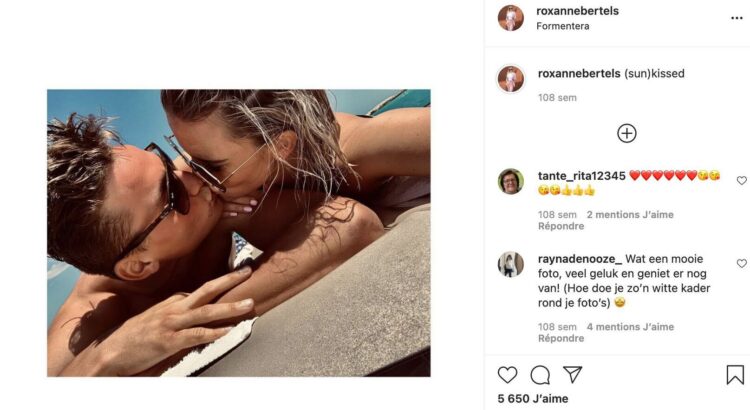
Mathieu van der Poel krijgt verontrustende reacties van fan na emotionele post van Roxanne Bertels over zijn Tourwinst: een cryptische opmerking zorgt voor opschudding op sociale media en roept vragen op over jaloezie en hartzeer te midden van zijn racetriumfen….

Een Liefdesverhaal: Mathieu van der Poel over Roxanne Bertels Wielrenner Mathieu van der Poel laat fans een kijkje nemen in zijn langdurige romance. Hij deelt oprecht waarom Roxanne Bertels de perfecte partner voor hem is, met haar constante steun, geduld en de rust die ze brengt in zijn drukke leven. Hun liefde, opgebouwd door jaren van gedeelde momenten en uitdagingen, is alleen maar sterker geworden en leidt hen nu naar het volgende hoofdstuk: hun huwelijk….
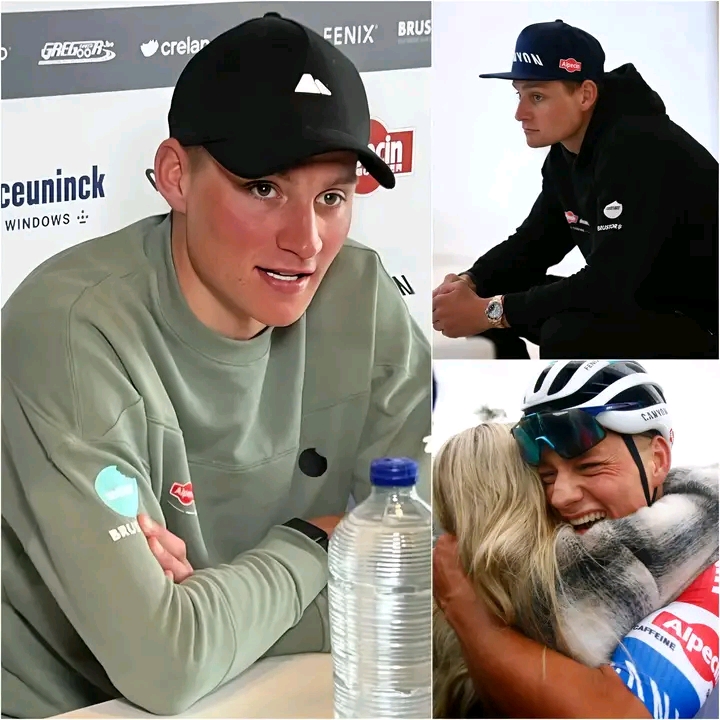
🚨 LAATSTE NIEUWS: Van der Poel’s onverwachte post ontketent emotionele storm – wielerwereld in totale shock…
About The Author
