
Jonathan Walters Announces Five New Stoke City Transfer Targets as Club Accelerates Summer Recruitment Drive — Sporting Director Reveals Major Plans to Strengthen the Squad Ahead of Pre-Season, with Multiple Signings Expected to Arrive in the Coming Weeks… Full Details Below ⤵️
Walters Pushes for Major Stoke City Squad Overhaul Ahead of New Championship Campaign
Stoke City sporting director Jonathan Walters has made it clear that the club intends to be one of the busiest sides in the transfer market this summer, as preparations continue for the 2026-27 Championship season. After another disappointing campaign that saw the Potters finish 17th in the table, Walters believes significant recruitment is needed to help the club move forward and establish a stronger identity on the pitch.
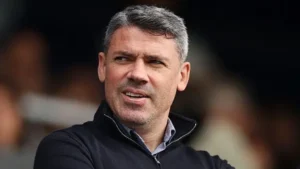
The former Stoke striker, who has served as sporting director since 2024, says his primary objective is to complete as many transfer deals as possible before the start of pre-season training. With the squad scheduled to return next month, Walters wants new arrivals integrated quickly so that the coaching staff can begin working with a more complete group.
Speaking about the club’s plans, Walters admitted that transfer activity across football has been slower than expected due to the impact of the FIFA World Cup and the delayed movement of players throughout the market. According to him, transfer business at Championship level often depends on what happens higher up the football pyramid, particularly in the Premier League.
When top-flight clubs delay their own recruitment decisions, it creates a chain reaction that affects clubs throughout England and Europe. Despite those challenges, Walters revealed that Stoke are already close to completing several deals and remains optimistic that new signings could arrive soon.
The Potters have already made changes to their squad following the conclusion of last season. Experienced midfielders Lewis Baker and Steven Nzonzi departed the club, while striker Milan Smit completed a permanent move after initially joining on loan. However, Walters believes more additions are necessary if Stoke are to avoid another season spent battling near the bottom of the Championship table.
One of the key lessons from last season was the impact of injuries. Stoke suffered numerous fitness problems throughout the campaign, disrupting consistency and making it difficult for the team to build momentum. The club brought in 10 players during the summer transfer window and another four in January, yet injuries prevented many of those recruits from making the desired impact.
As a result, Walters and his recruitment team have spent considerable time assessing where improvements can be made. He explained that planning for multiple scenarios is now a crucial part of the club’s strategy. Whether a player is sold unexpectedly or a key member of the squad suffers a long-term injury, Stoke want to be prepared with alternative options already identified.
Walters described the recruitment process as one that requires extensive preparation. Rather than focusing on a handful of targets, the club continuously monitors hundreds of players across different leagues and countries. This allows Stoke to react quickly when opportunities arise and ensures they have alternatives if preferred targets become unavailable.
However, financial realities remain a major factor in determining who Stoke can realistically pursue. Walters acknowledged that the club cannot compete for elite Premier League stars whose transfer fees may reach £30 million or £40 million. Instead, Stoke must identify players who fit the club’s needs while remaining within budget.
The sporting director also suggested that mistakes were made in previous recruitment cycles. While not criticising individual players, he admitted the club may have lacked the right balance of characteristics and personality types required to succeed in the Championship. According to Walters, finding players with the correct profile is just as important as identifying technical ability.
A major theme of his vision for Stoke is establishing a clear and recognisable football identity. Walters believes the team must become more energetic, aggressive, and effective both with and without possession. While he values technical quality, he insists that commitment, work rate, and intensity are non-negotiable attributes for any player joining the club.
He pointed to possession statistics as evidence that successful teams generally control games more effectively. Walters argued that clubs earning promotion from the Championship typically dominate possession while also creating more chances and scoring more goals than their opponents.
Yet he stressed that possession alone is not enough. Stoke must combine ball control with purpose, attacking intent, and relentless effort. The club wants players capable of pressing opponents aggressively, winning physical battles, and maintaining a high tempo throughout matches.
For Walters, these qualities reflect what Stoke City has traditionally represented. During his own playing career at the club, Stoke became known for their intensity, determination, and strong connection with supporters. He wants the current team to rediscover those characteristics and create an atmosphere that excites fans.
The sporting director stated that supporters should see a team willing to fight for every ball and compete in every duel. He believes fans are more likely to connect with players who demonstrate passion and commitment, even during difficult periods.
This philosophy will heavily influence Stoke’s recruitment decisions throughout the summer. Walters indicated that incoming players do not necessarily need to be household names or expensive signings. Instead, they must possess specific strengths that align with the club’s long-term vision.
He explained that every player considered by Stoke must offer something distinctive that contributes to the team’s style of play. Whether it is physicality, pressing ability, leadership, creativity, or defensive resilience, each recruit must bring qualities that enhance the overall identity the club is trying to build.
Another important factor is alignment throughout the organisation. Walters emphasised that everyone at Stoke—from the boardroom to the coaching staff and players—must share the same understanding of how the team should play. He believes this unity is essential if the club is to make meaningful progress over the coming seasons.
The next few weeks could therefore prove crucial for Stoke City’s future. With pre-season fixtures approaching, including a behind-closed-doors encounter against Portuguese side Braga and a friendly against neighbours Crewe Alexandra, the club hopes to have several new faces through the door before competitive action resumes.
After nearly a decade away from the Premier League, patience among supporters is beginning to wear thin. Stoke have spent nine seasons attempting to rebuild since relegation in 2018, but have yet to seriously challenge for promotion. Walters understands those frustrations and appears determined to accelerate the club’s progress.
His comments suggest a summer of significant activity lies ahead. While financial limitations remain, Stoke’s recruitment team is working intensely to strengthen the squad and establish a clear footballing identity. If Walters succeeds in securing his desired signings and implementing his vision, the Potters may finally be able to look upward rather than over their shoulders when the new Championship season begins.

ULTIMĂ ORĂ: După săptămâni de speculații privind plecarea lui Alibek Aliev, CFR Cluj ar fi luat decizia surprinzătoare de a-l păstra în lot, ajungând la un acord pentru prelungirea contractului său într-o înțelegere evaluată la milioane de euro….

🚨SHOCKING FAMILY ANNOUNCEMENT: Bayern Munich superstar Michael Olise leaves fans emotional after appearing alongside his stunning girlfriend and a mysterious newborn baby reportedly named after a Bayern Munich legend! 😱❤️ Supporters are now desperately trying to uncover which club icon inspired the surprise name as the viral photos explode across social media. But one hidden detail in the images has fans talking even more… SEE MORE DETAILS BELOW ⤵️

ȘTIRE-BOMBĂ: Legenda fotbalului românesc Ciprian Deac, în lacrimi după un rezultat ADN șocant care a scos la iveală un adevăr ascuns de zeci de ani… Mai multe mai jos 👇
About The Author
