 By Admin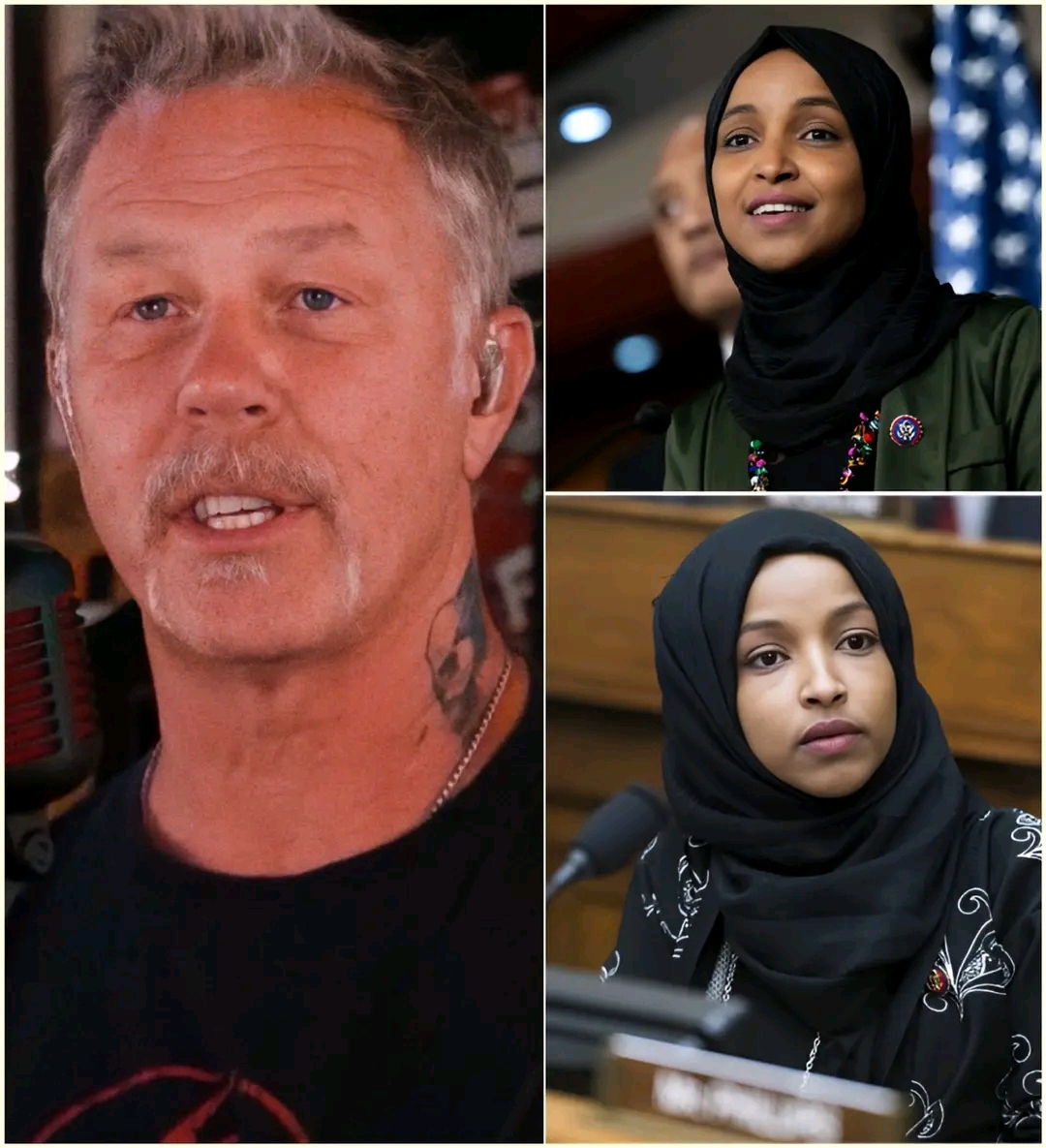
THIS IS AWESOME EVEN AS IT MARKS HIS FIRST TIME — Breaking: Metallica frontman James Hetfield faces backlash after alleged political remarks ignite debate, divide fans, and reignite questions about speech..
—
Global Music Icon James Hetfield at Center of Political Firestorm After Alleged Remarks Spark Widespread Backlash
A storm of controversy erupted across social media, news outlets, and the music world this week after comments attributed to Metallica frontman James Hetfield ignited a fierce national debate over celebrity speech, immigration, and the growing polarization of American public life.
The alleged remarks, which surfaced following what was described as a private or semi-public address, were rapidly circulated online, prompting immediate condemnation from civil rights organizations, political leaders, and fans who accused the rock legend of crossing a dangerous line. Supporters, however, framed the comments as an expression of free speech and long-simmering frustration shared by many Americans.
As of now, Hetfield has not issued a formal, detailed public statement clarifying or expanding on the remarks, leaving room for speculation, interpretation, and intensifying scrutiny.
A Sudden Shift From Music to Politics
James Hetfield has spent more than four decades cultivating a reputation as one of heavy metal’s most influential and enigmatic figures. Known for his introspective lyrics, battles with addiction, and dedication to music over politics, Hetfield has historically avoided explicit partisan commentary.
That history is precisely why the current controversy has struck such a nerve.
Within hours of the remarks spreading online, hashtags calling for accountability began trending, while fan communities fractured into heated camps. Some longtime listeners expressed disbelief that the Metallica co-founder would engage in language they viewed as divisive or exclusionary. Others argued that artists should not be silenced simply because their opinions are unpopular.
“This feels completely out of character,” wrote one fan on a Metallica forum. “James has always talked about unity through music. This doesn’t align with the guy who wrote those songs.”
Another countered, “He’s allowed to speak his mind. You don’t have to agree, but canceling someone for words is dangerous territory.”
Immediate Political and Advocacy Response
Progressive lawmakers and immigration advocacy groups reacted swiftly, emphasizing the broader implications of rhetoric used by influential public figures.
Several organizations released statements warning that language perceived as targeting immigrants or questioning the legitimacy of elected officials can fuel discrimination and deepen social divides.
“When celebrities speak, millions listen,” one civil rights group noted. “Words carry consequences, especially in a climate already charged with fear and misinformation.”
Supporters of Representative Ilhan Omar also pushed back strongly, framing the controversy as part of a larger pattern of attacks against outspoken political figures, particularly women and minorities in government.
Meanwhile, conservative commentators and some free speech advocates defended Hetfield’s right to express political opinions, arguing that disagreement should be met with dialogue rather than outrage.
Metallica’s Silence and the Weight of Legacy
Metallica as a band has not released an official statement addressing the controversy, nor have other members publicly commented as of publication. Industry observers note that the group’s global brand — built on decades of touring, philanthropy, and cross-generational appeal — now faces an unexpected reputational test.
Music analysts point out that Metallica’s audience spans cultures, continents, and political ideologies, making the current moment particularly delicate.
“This isn’t just about one statement,” said a veteran music journalist. “It’s about how legacy artists navigate an era where every word can become a headline within minutes.”
The band’s charitable foundation, All Within My Hands, which has supported disaster relief, education, and workforce development initiatives, has also come under renewed scrutiny online, with some calling for clarification of its values and mission.
Social Media: Amplifier and Battleground
As with many modern controversies, social media acted as both accelerant and courtroom.
Short clips, screenshots, and secondhand accounts spread rapidly, often stripped of context. Fact-checkers cautioned users to verify sources before drawing conclusions, noting how quickly misinformation can gain traction during emotionally charged moments.
“This is a textbook example of how narratives form online,” said a digital media researcher. “By the time facts catch up, opinions are already locked in.”
Calls for boycotts appeared alongside messages of solidarity. Some fans posted videos burning merchandise, while others shared memories of concerts that shaped their lives, pleading for perspective and restraint.
The Broader Cultural Conversation
Beyond the individual controversy, the incident has reignited a long-running debate about the role of artists in political discourse.
Should musicians stick to music? Or does fame inherently come with civic responsibility?
Historically, artists from Bob Dylan to Rage Against the Machine have used their platforms to address political issues, often facing backlash in the process. What makes the current moment distinct, analysts argue, is the speed and scale of reaction — and the heightened sensitivity surrounding identity, immigration, and democracy.
“We’re in an era where nuance is rare,” said a cultural studies professor. “Public figures are either heroes or villains within hours.”
Fans Caught in the Middle
For many fans, the controversy has been deeply personal.
Metallica’s music has served as a soundtrack to lives marked by struggle, rebellion, and resilience. Reconciling that emotional connection with political disagreement has proven difficult.
“I grew up on their albums,” said one longtime listener. “I don’t want to believe someone whose music helped me survive tough times could hurt others with words.”
Others emphasized separating art from artist, a debate as old as celebrity itself.
“You don’t have to agree with someone’s politics to appreciate their work,” another fan said. “If we start demanding ideological purity, we’ll lose half of culture.”
What Comes Next
As pressure mounts, observers are watching closely for a response from Hetfield or Metallica’s management. A clarification, apology, or reaffirmation of values could significantly shape public perception moving forward.
PR experts note that silence can be interpreted in multiple ways — as reflection, defiance, or uncertainty — and that timing will be critical.
“If a statement comes, it needs to be thoughtful,” said a crisis communications specialist. “Anything reactive could worsen the situation.”
Tour dates, album promotions, and upcoming public appearances may also be affected, depending on how the controversy evolves.
A Moment That Reflects a Nation
Ultimately, the uproar surrounding James Hetfield underscores a deeper reality: America’s cultural and political fractures increasingly play out through celebrity moments.
What began as alleged remarks from a rock icon has become a mirror reflecting national anxieties about identity, belonging, and free expression.
Whether this episode fades or becomes a defining chapter in Hetfield’s public life remains to be seen. What is clear is that in today’s media landscape, even legends are not insulated from the consequences of controversy — and the conversation sparked will extend far beyond the music world.